combined AI-related losses
AI Execution Control
360° audit before agents run
Scope Logic · system proof
Stop building the wrong thing perfectly.
AI can now scale unclear direction before anyone notices.
AI rollouts are already producing measurable losses, unchecked outputs, and canceled agentic projects. The pattern is clear: execution is moving faster than verification.
Scope Logic fixes the starting point.
Source note: EY/Reuters, KPMG, and Gartner on AI rollout losses, unchecked AI outputs, and agentic project cancellation risk.
Unclear
Audited
Ready
Loose Brief
Messy Notes
AI Prompt
Client Request
360°
Four-Quadrant Audit
Builds the full view
Forces the model to inspect the problem from four angles before it acts.
Objective Locked
Ambiguity Resolved
Ready to Run
Live
Problem mapped
Reasoning quadrants
4
Control gates
5
Source of truth
1
360°
Problem view before execution
A→D
Ambiguity converted into deterministic data
Any
Domain, workflow, or decision type
Use intelligence to audit the work before automation accelerates it.
skip AI accuracy checks
agentic AI projects may be scrapped
The Control Receipt
Wrong
now
scales.
AI can now write code, screen candidates, trigger tools, route work, and ship deliverables before anyone proves the ask was right.
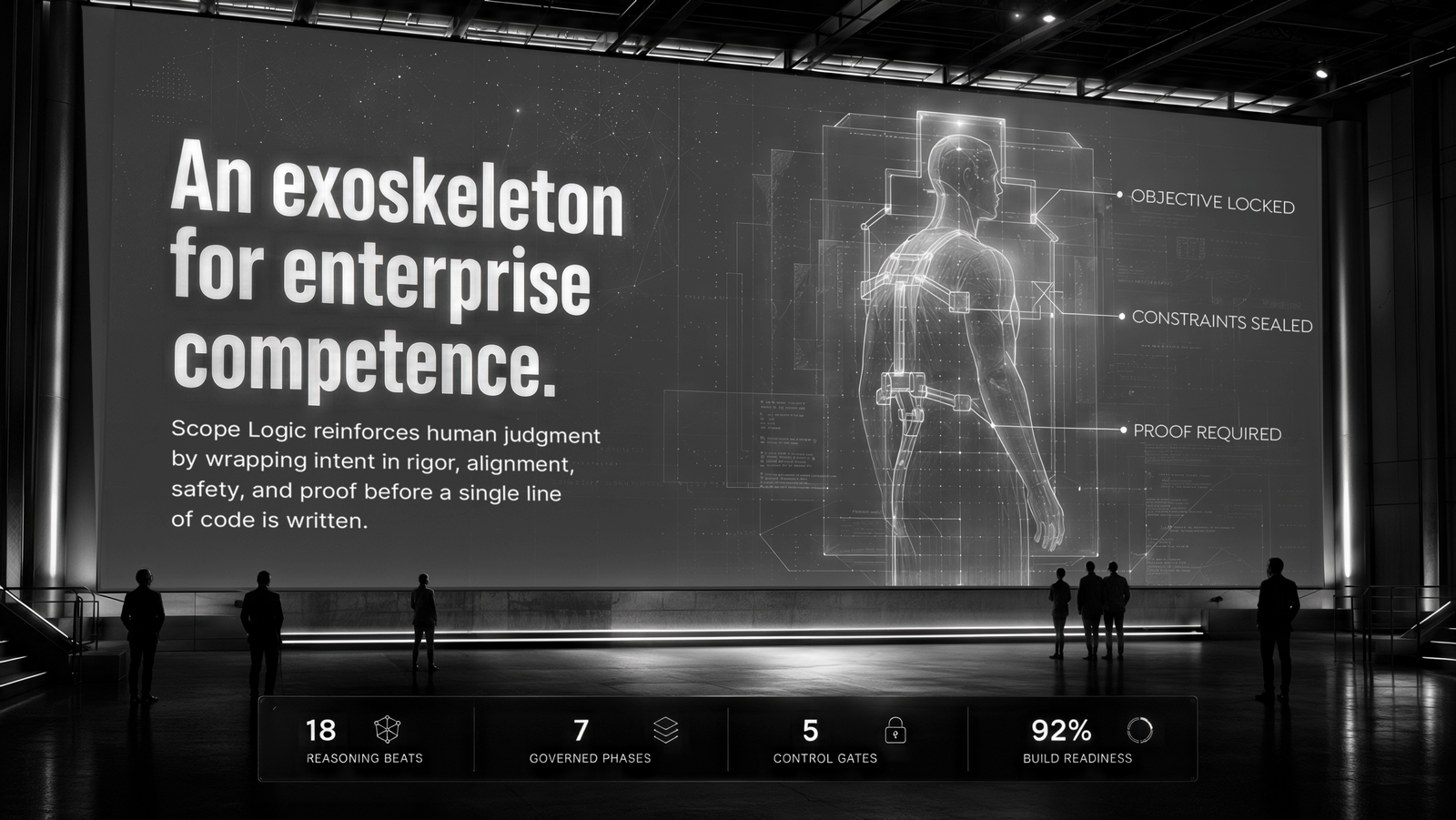
Scope Logic gives every ask a control receipt: what it is supposed to do, what limits it must obey, what proof it needs, and why it is cleared to continue.
Scope Logic Receipt
Execution Cleared
The risk is not that AI gets it wrong.
The risk is that wrong gets executed.
01
Locked
Objective
The real target is explicit.
02
Set
Scope Equation
Intent + constraints + proof + drift limits.
03
Gated
Proof Standard
The output must pass evidence checks before delivery.
04
Recorded
Decision Trace
Why the work was approved remains visible.
From unchecked output to accountable execution.
Scope Logic V1.5
70+ preset control patterns for AI-assisted thinking, production, and execution.
A working library for turning messy intent into scoped workflows, reasoning gates, testable decisions, and production-ready handoffs.
01
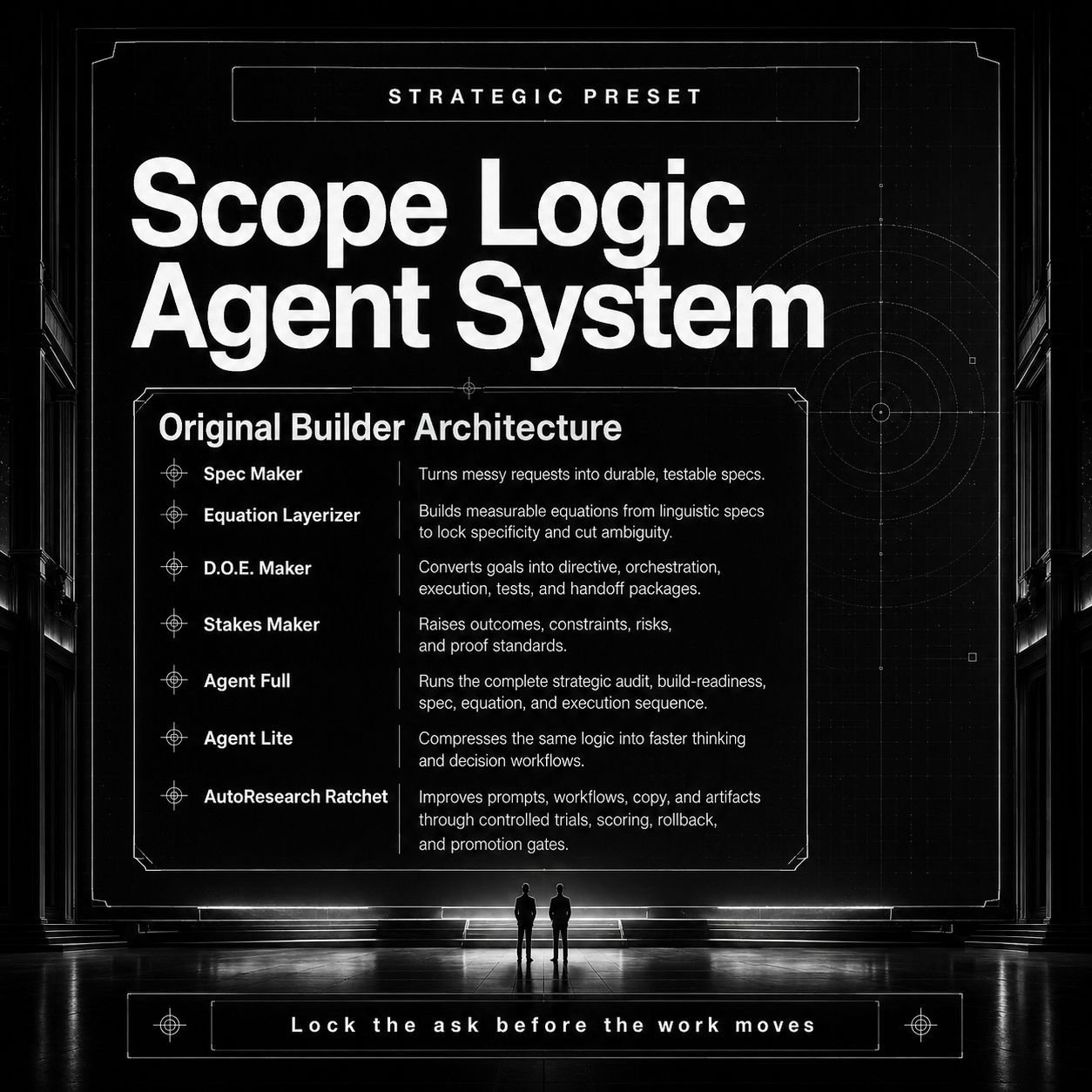
Agent Builders
Spec, equation, stakes, and handoff systems.
Agent D.O.E. Maker
Agent Equation Maker
Agent Full 16 Beats n DOE
Agent Full 18 Beats
Agent Lite 10 Beats
Agent Lite 11 Beats
Agent Lite 6 Beats
Agent Spec Maker
Agent Stakes HP Maker
Agent Stakes Sec Maker
AutoResearch Ratchet Kernel
02
Reasoning Engines
Logic, evidence, proof, and belief control.
Abductive Reasoning
Analogical Reasoning
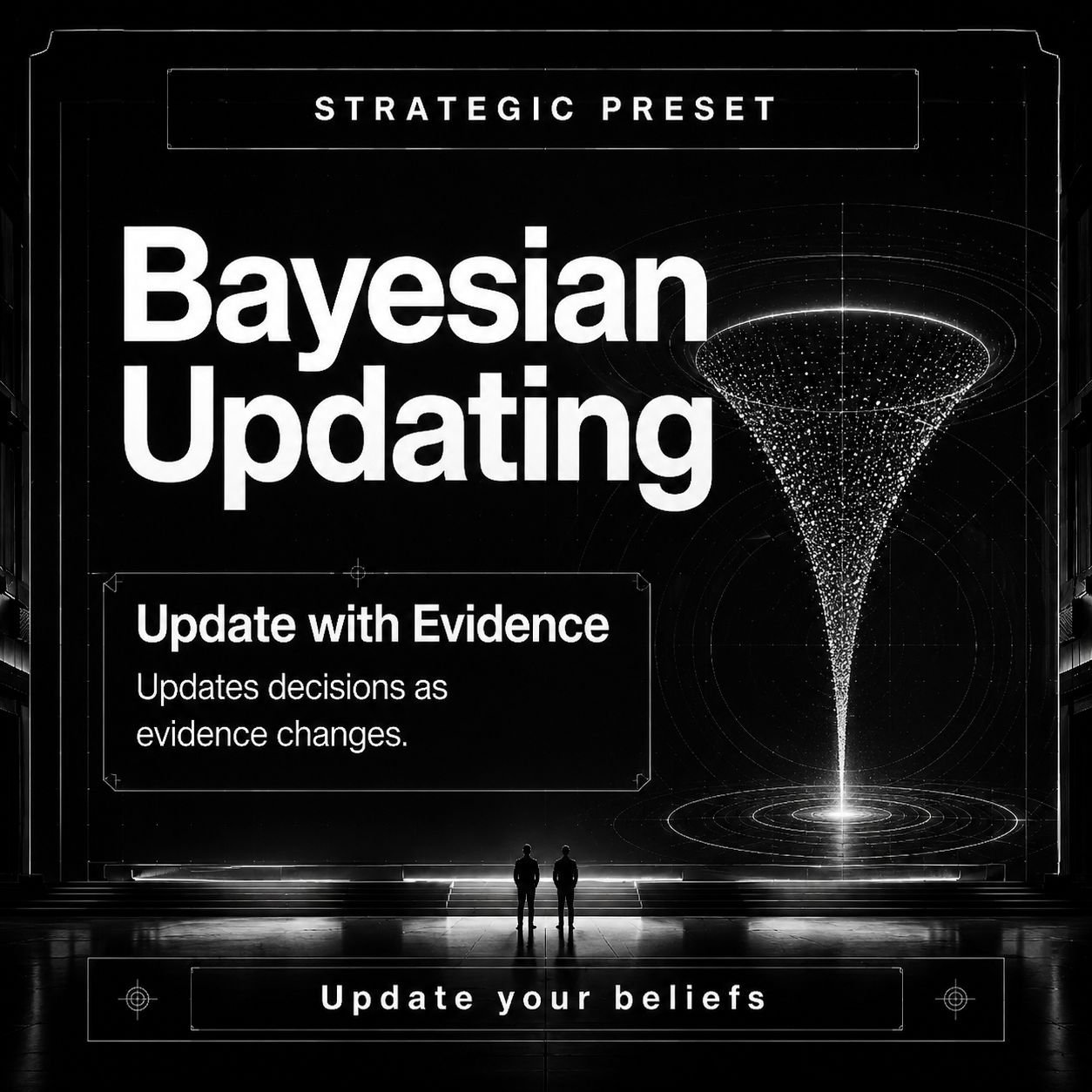
Bayesian Updating
Deductive Reasoning
Deductive Reasoning Benchmark
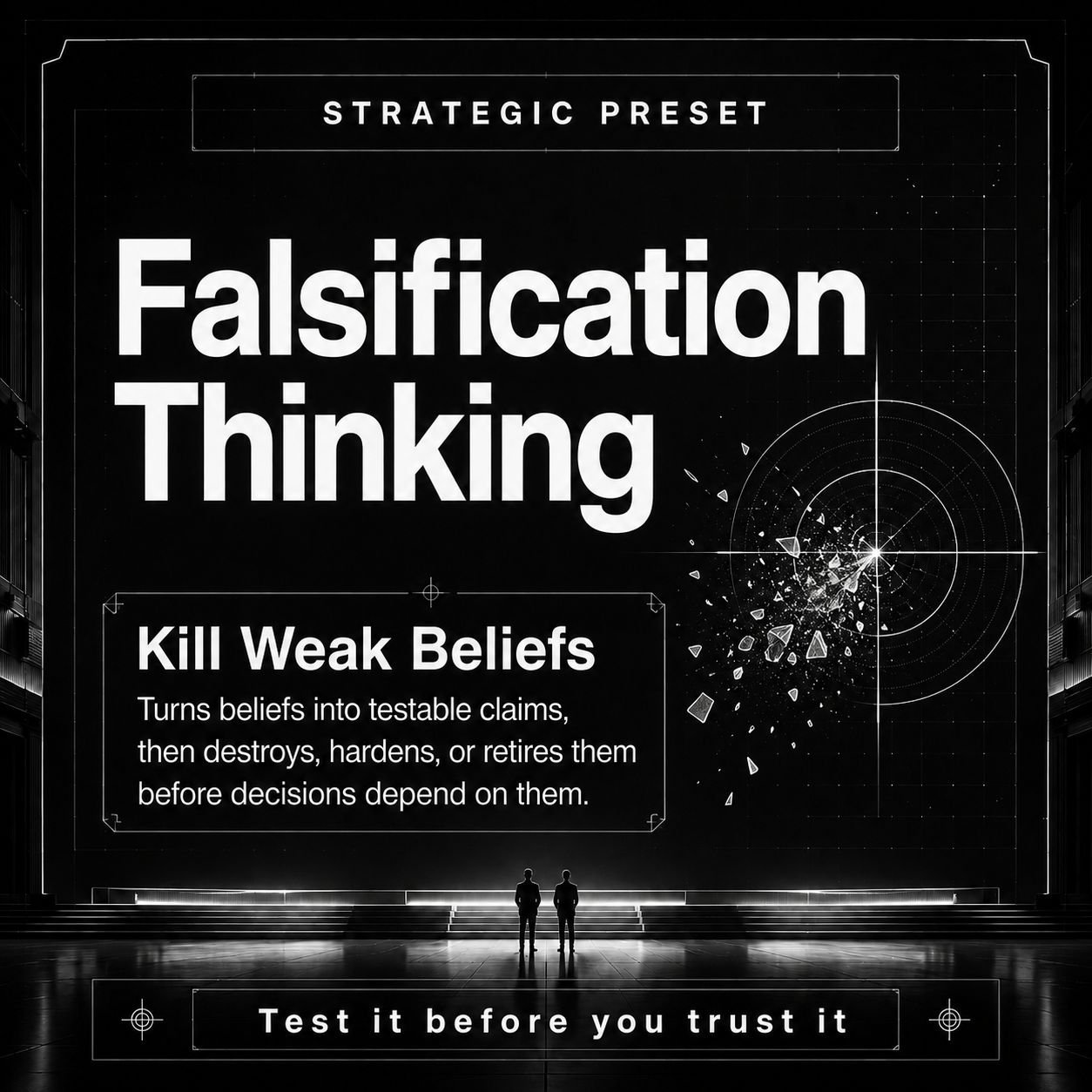
Falsification Thinking
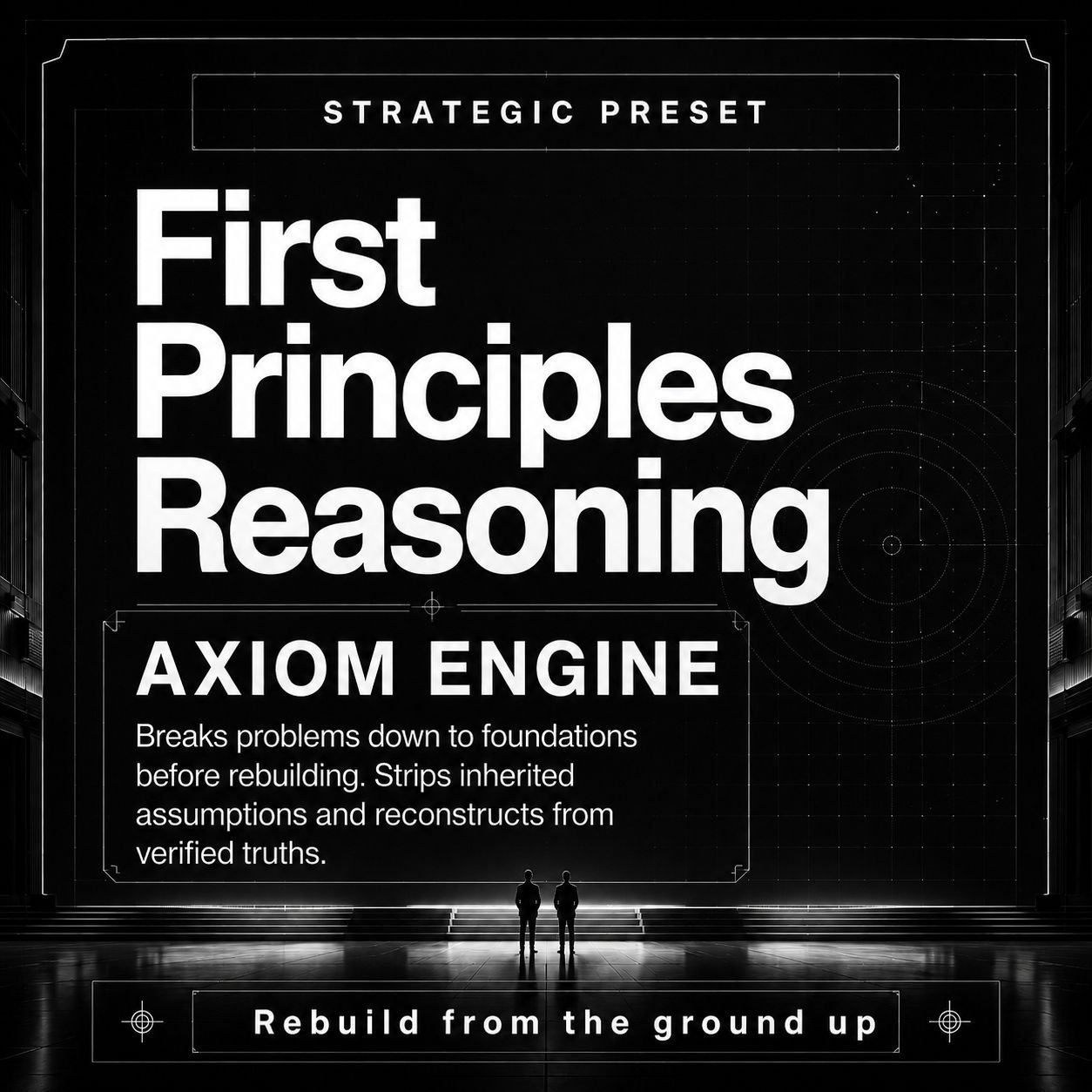
First Principles Reasoning
Inductive Reasoning
Map vs Territory
Mental Models
Scientific Method
03
Decision and Risk
When the cost of being wrong matters.
Black Swan Thinking
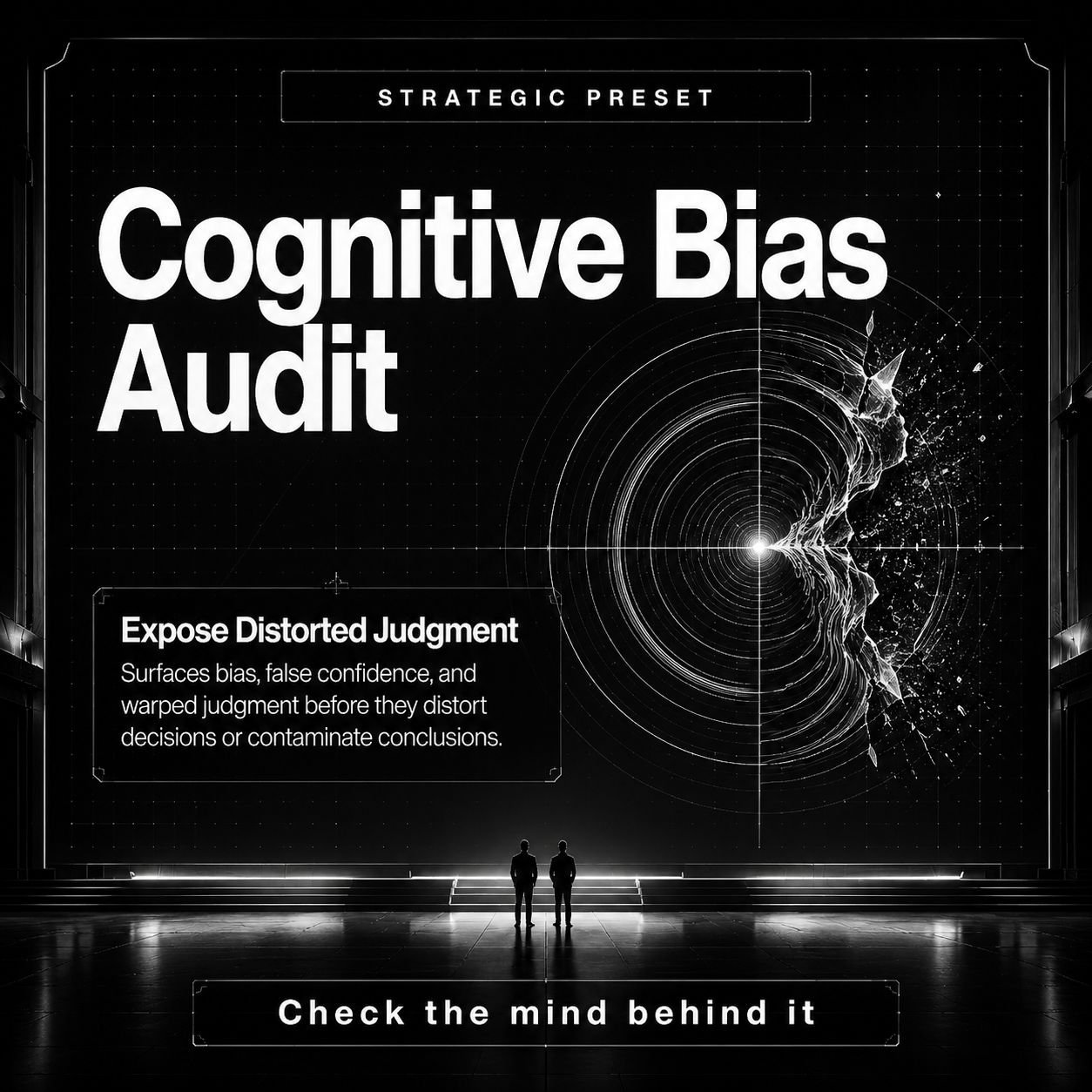
Cognitive Bias Audit
Cost Benefit Analysis
Expected Value Thinking
Inversion Thinking
Ladder of Inference
Margin of Safety
Pre Mortem
Regret Minimization
Second Order Thinking
04
Strategy Systems
Market, positioning, competition, and direction.
Blue Ocean Strategy
Game Theory
MECE Issue Trees
OODA Loop
Pareto 80 20
Porters Five Forces
Scenario Planning
SCQA Framework
SWOT Analysis
S Curve Thinking
05
Operations Logic
How work moves, improves, and ships.
Agile Scrum Thinking
Chunking
Compounding Effects
Constraint Theory TOC
Critical Path Method
Cybernetics
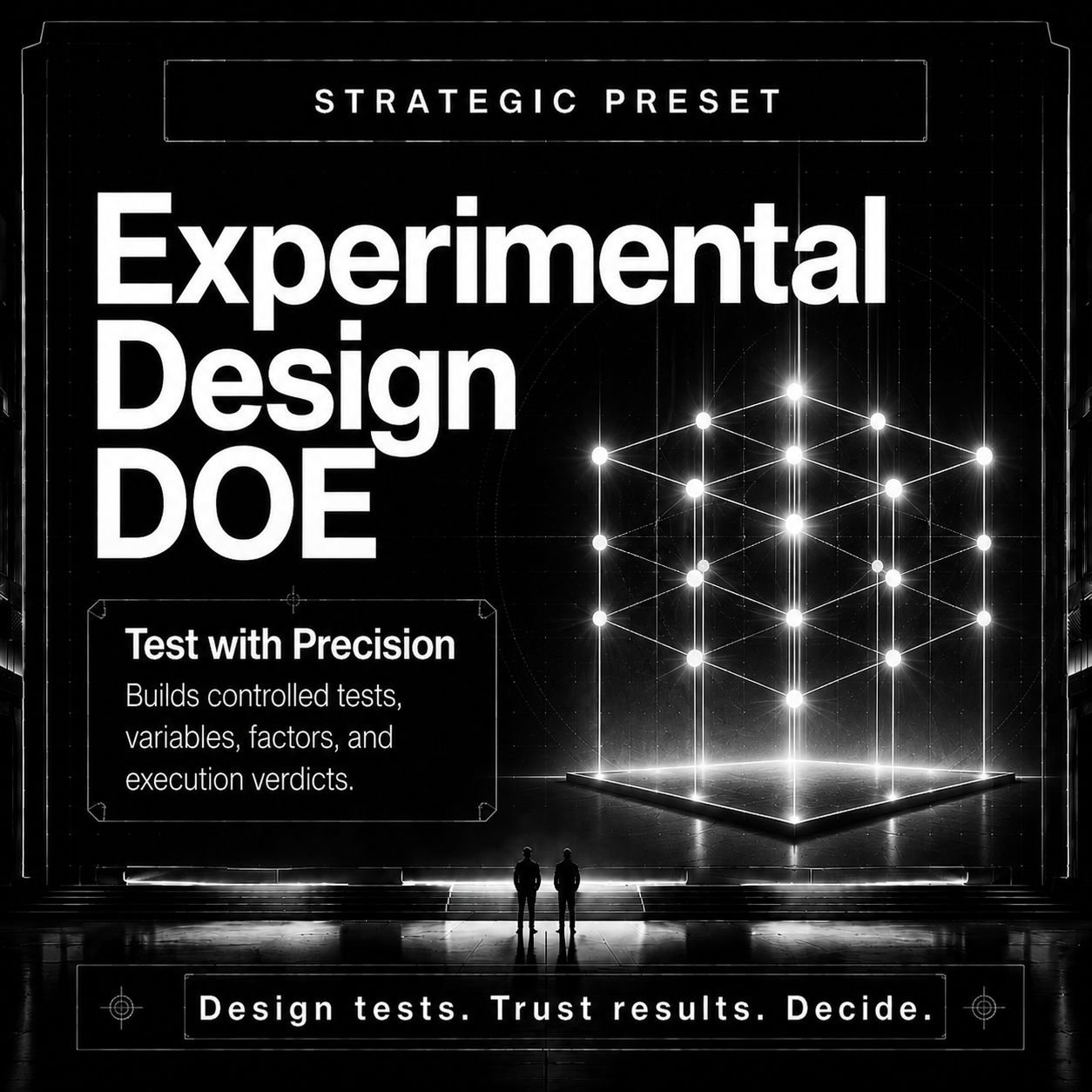
Experimental Design DOE
Feedback Loop Mapping
Kaizen
Lag vs Lead Indicators
Lean Thinking
PDCA Cycle
Root Cause 5 Whys
SOP Runbook Design
Systems Dynamics
Throughput Optimization
06
Creative and Language
Idea movement, framing, copy, and user logic.
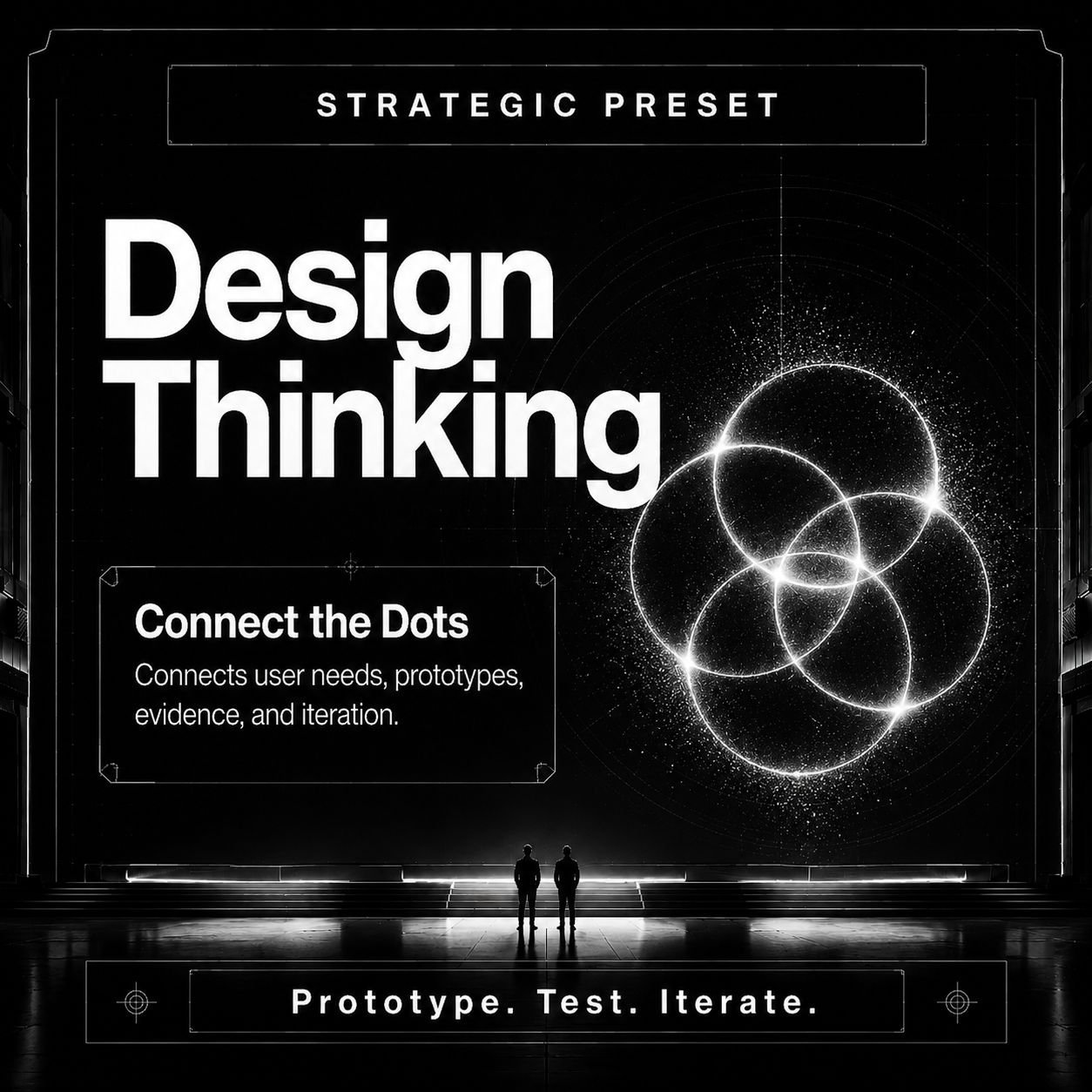
Design Thinking
Lateral Thinking
Milton Model
NLP Meta Model
Reframing
SCAMPER
TRIZ
Presuppositional Copy Audit
07
AI Research Layer
Planning, world models, adversarial thinking, and support files.
Yann LeCun First Principles Deconstructer
LeCun Hierarchical Reasoning Engine
LeCun World Model Reasoning Engine
Meta Chief Scientist Hallucination Destroyer
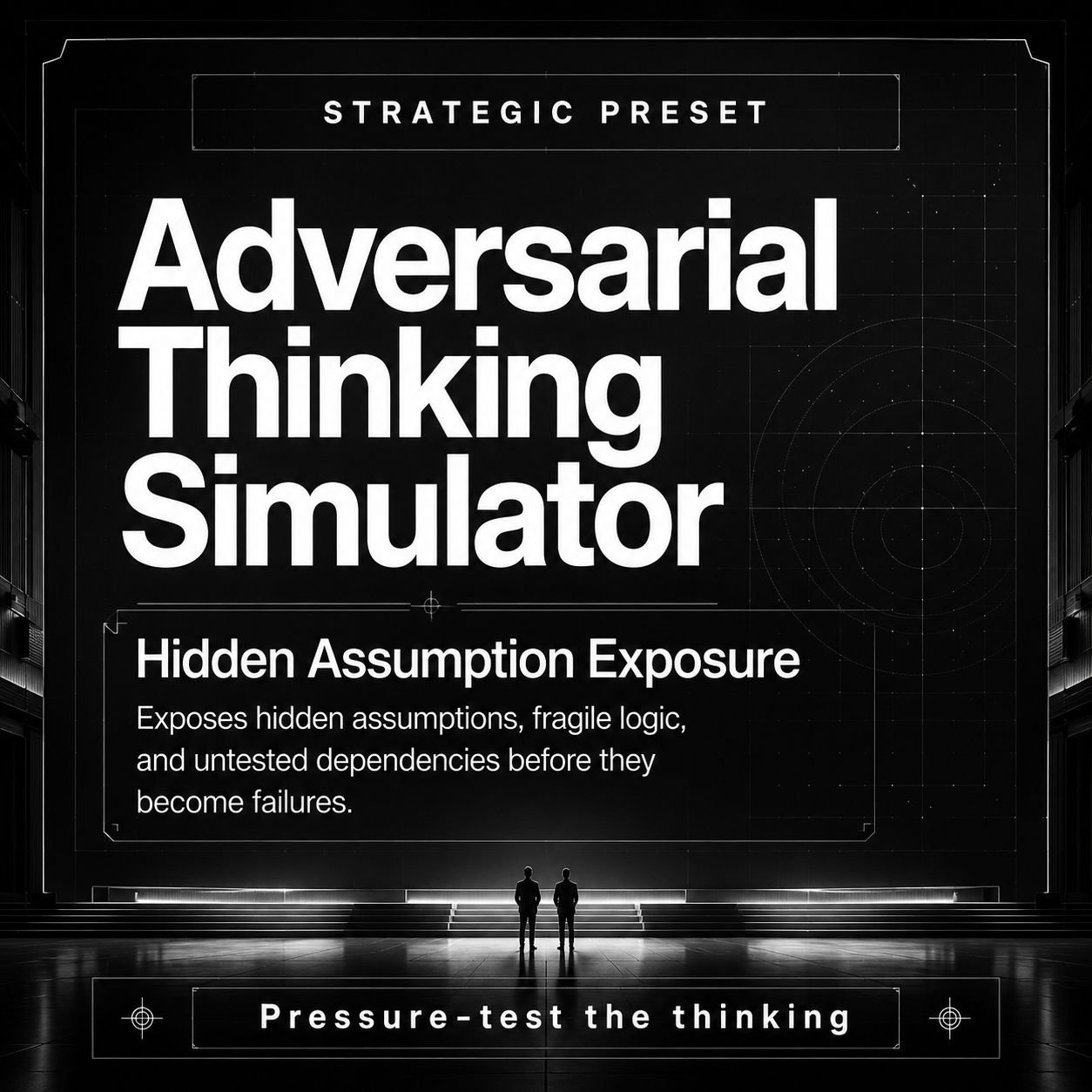
Meta FAIR Adversarial Thinking Simulator
Meta FAIR Multi-Step Planning Framework
NYU Self-Supervised Learning Knowledge Builder
Turing Award Energy-Based Decision Analyzer
Preset Categories
Reasoning Type Integrity Standard
Presets Zip
Business translation:
Scope Logic is not a prompt folder. It is a control library for choosing the right reasoning mode,
locking the ask, testing the output, and moving AI-assisted work into production.
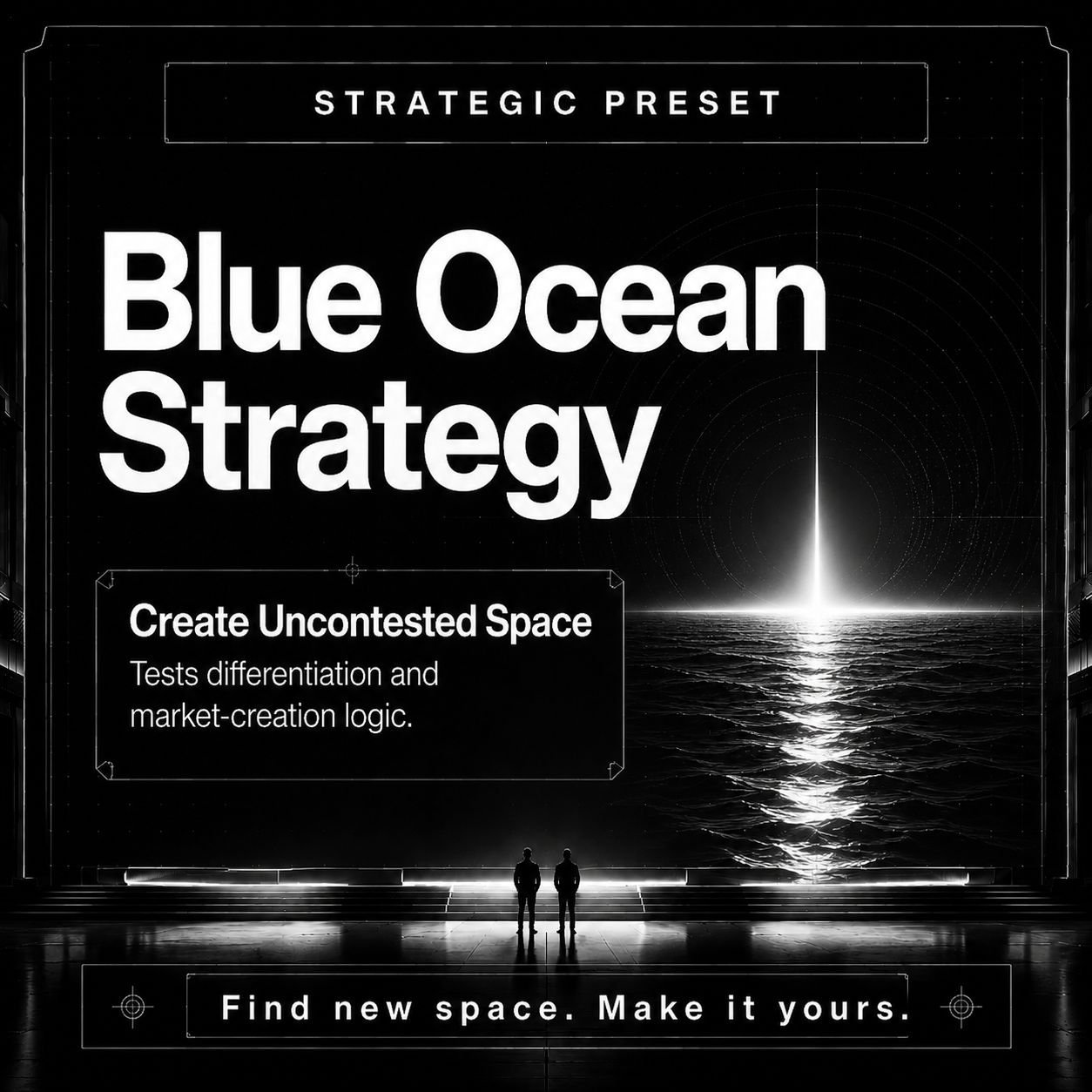
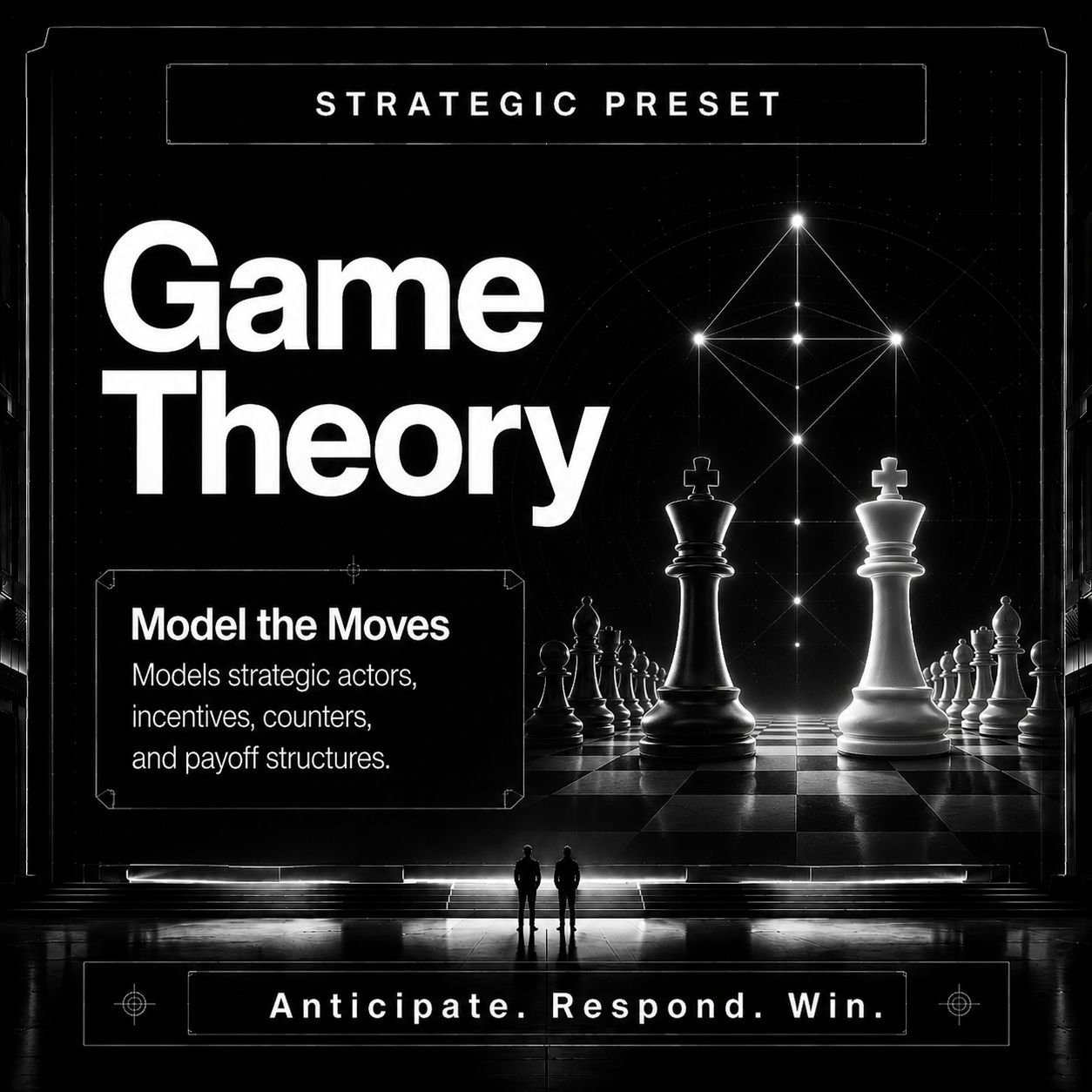
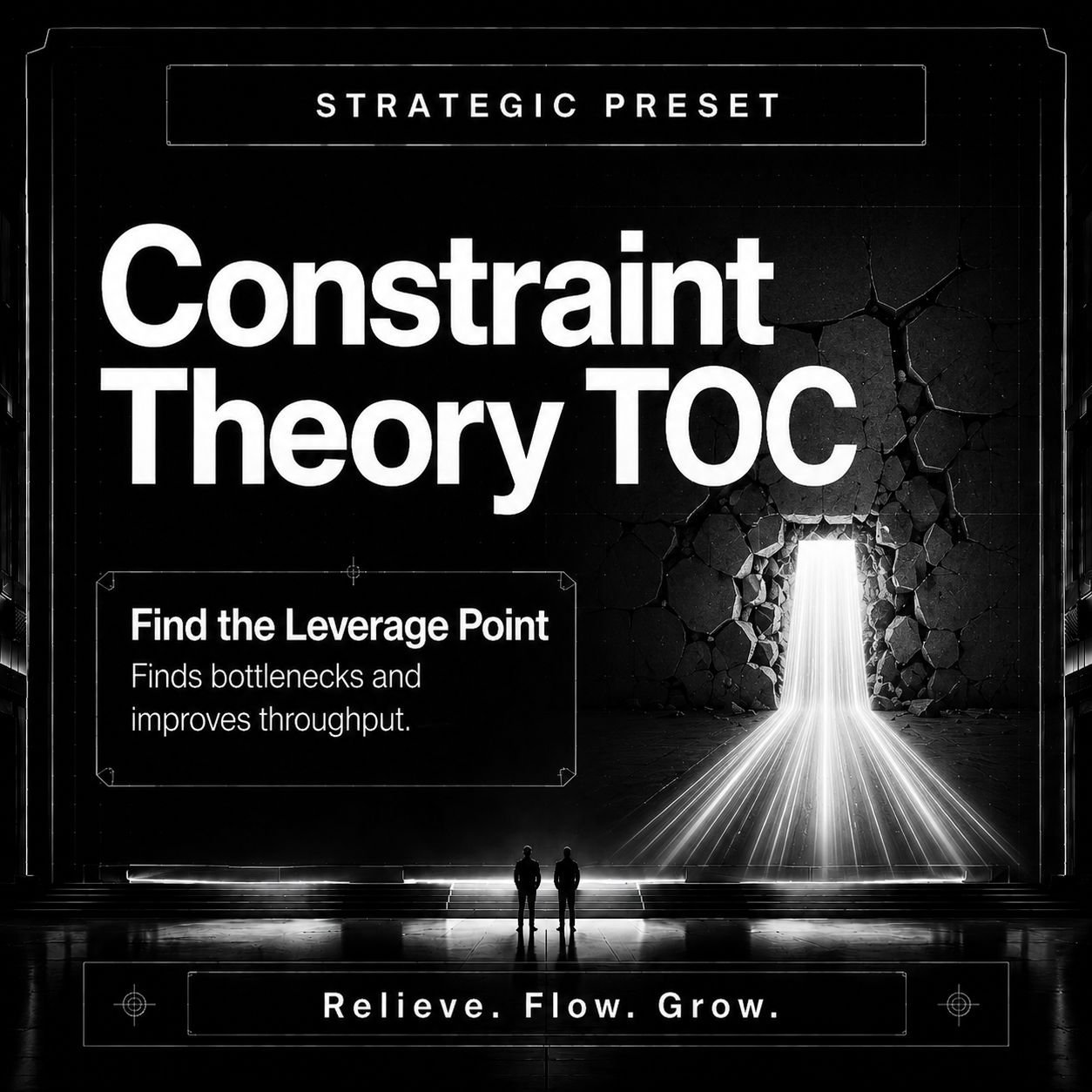
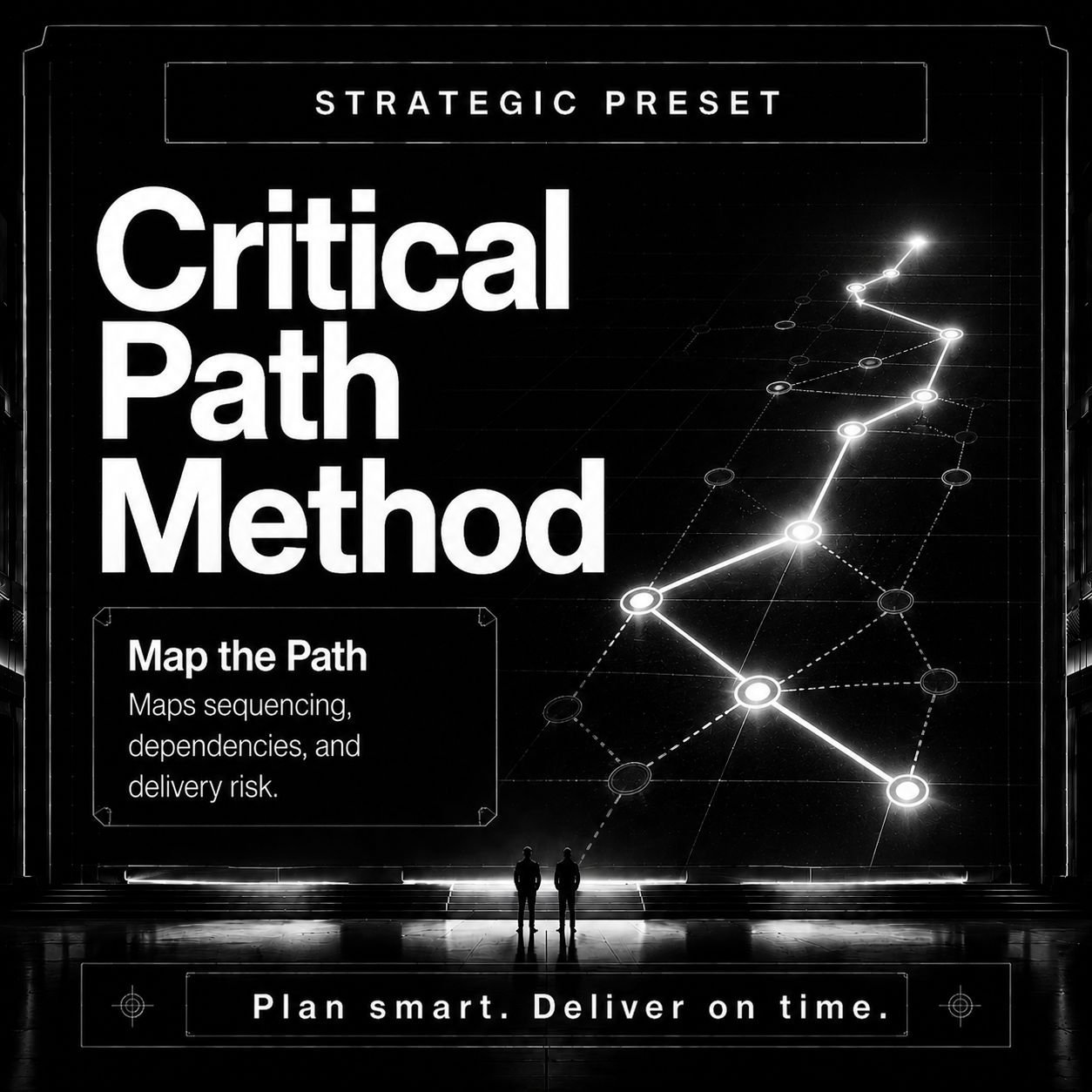
Scope Logic Control Layer
Only Commit To What Survives.
Most AI performs confidence. Scope Logic makes the work pass inspection. Before an answer reaches the stage, it must prove the claim, reveal the mechanism, and show the measurable lift. No proof, no confidence. No mechanism, no claim. No lift, no win.
Gate 01
Proof
The system defines what would make the answer hard to dismiss before it lets the claim stand.
Gate 02
Force
The system identifies what actually makes the outcome happen, so the answer is earned, not asserted.
Gate 03
Lift
The system names the measurable difference between a decent answer and one worth building around.
Inspection before output
Designed for high-stakes AI work
The Intent Translation Layer
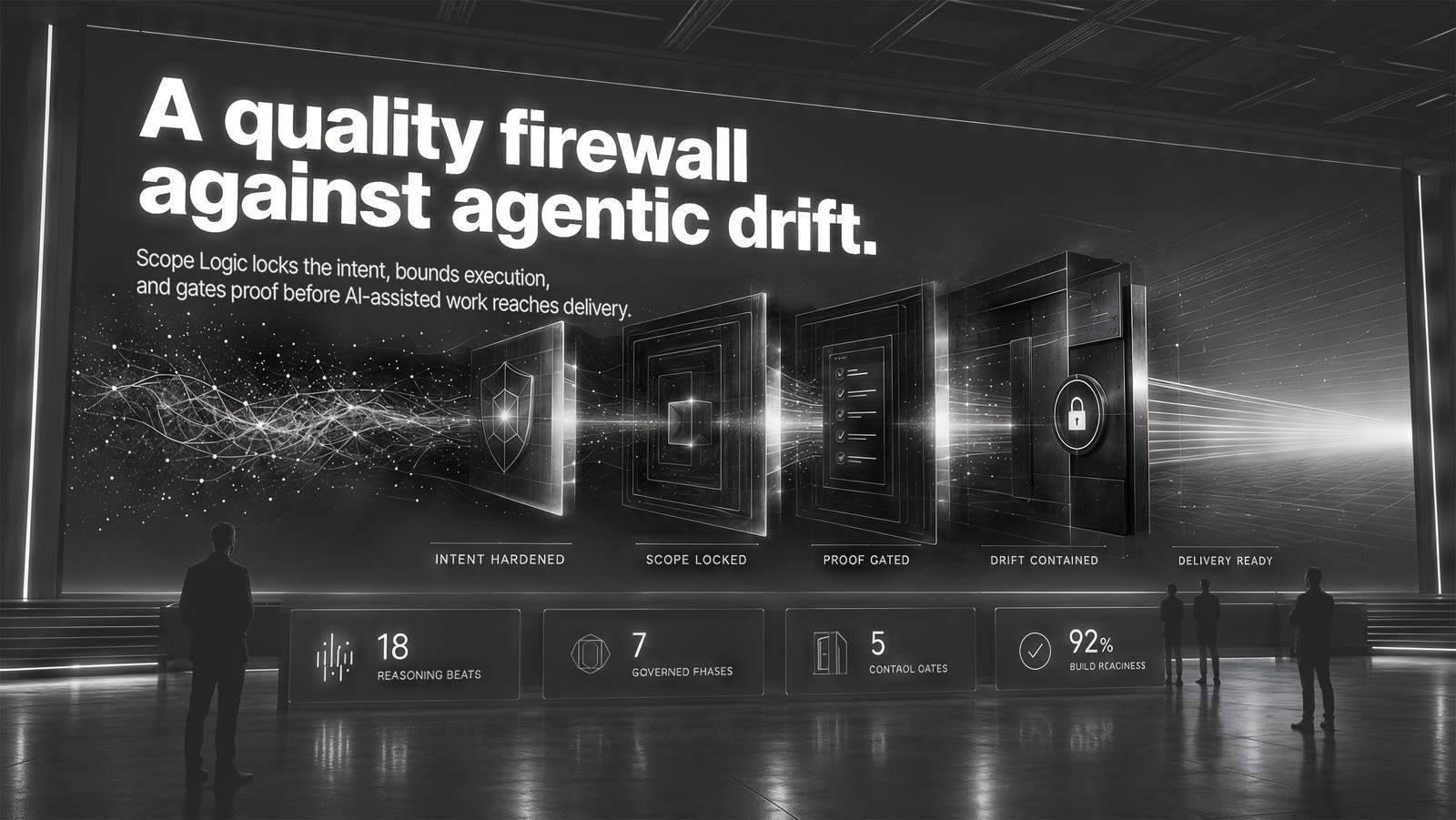
From unresolved intent to execution you can trust.
Scope Logic turns prompts, transcripts, briefs, and AI-generated outputs into scoped specs, constraint maps, proof gates, and delivery-ready decisions for teams, tools, and agents.
Unresolved Intent
Vague asks, mixed goals, missing limits, and scattered context.
Input state: unstableScope Lock
The true target, audience, format, and success condition are defined.
Intent becomes explicitConstraint Map
Brand, creative, technical, approval, and workflow boundaries are sealed.
Drift becomes visibleProof Gate
Outputs must pass evidence checks before they become deliverables.
Trust is earnedTrusted Execution
A clear spec, decision trail, and delivery-ready system.
Output state: trusted
Before Scope Logic
Fast output. Weak confidence.
AI can produce polished work while missing the real target, constraints, or business need.
After Scope Logic
Locked intent. Trusted delivery.
The work moves through clear scope, sealed constraints, proof gates, and an audit-ready decision trail.